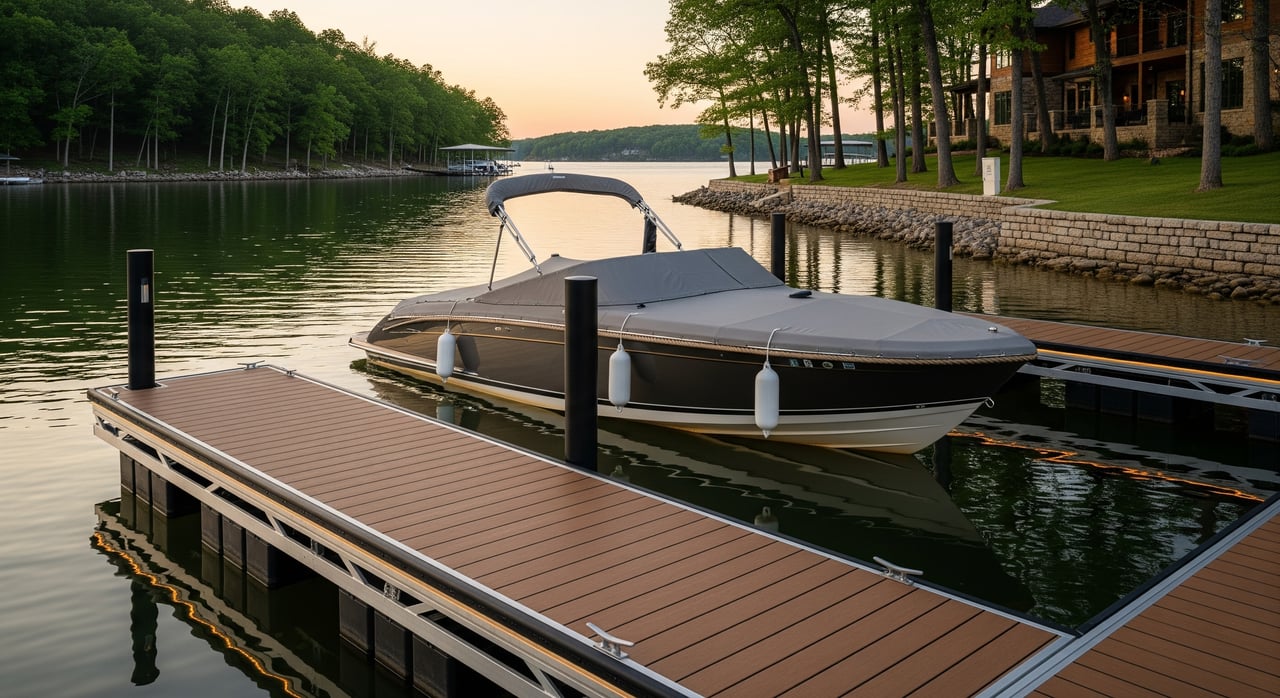
Ever picture yourself walking out from your Porto Cima deck and stepping right onto your boat, only to wonder if the slip will actually fit and protect it? You are not alone. Boat slip details can be the difference between easy weekends and constant headaches. In this guide, you will learn how to match your boat to the right slip and lift in Sunrise Beach and The Club at Porto Cima, what to ask the HOA or marina, and how to plan for local lake conditions. Let’s dive in.
Understand local marina rules
The Club at Porto Cima is a private, master‑planned community with an organized marina and HOA structure. Slip options and rules can vary by neighborhood, so start by getting the current marina policy and community CC&Rs. These documents outline slip assignment rules, permitted lift types, design standards, and any ownership or lease terms.
Ask the marina manager for the latest on what slip types are available. Communities may offer owned slips, leased slips, guest slips, and sometimes dry storage. Policies on transfers, subleasing, and approved contractors often differ, so confirm the specifics before you plan your boat purchase or lift installation.
Plan for Lake of the Ozarks conditions
Lake of the Ozarks is a managed reservoir, so water levels can shift seasonally. That means actual water depth at a slip can change across the year. For any slip you are considering, ask for the current measured depth at normal pool and any recent depth survey, as well as typical seasonal minimums and maximums.
Exposure matters, too. Slips on points or along wide channels can see more wind and wave energy, while protected coves are calmer but may be shallower. Ask about breakwaters, wave attenuation, and typical boat traffic near the slip. Finally, confirm winter procedures. Many owners winterize boats and lifts, and each facility can have different guidelines on whether lifts stay in or are serviced in place.
Measure your boat the right way
You want your slip choice to fit both your boat and your lifestyle. Use the actual on‑water dimensions and weight, not a trailer length or a rough brochure estimate. Focus on these measurements:
- LOA (Length Overall): Include swim platforms, bowsprits, and pulpits. This determines if the boat physically fits the slip.
- Beam: The maximum width across the hull. This sets how much side clearance you will need.
- Draft: The part of the hull below the waterline. This is critical for minimum water depth.
- Height or air draft: The clearance from waterline to the highest point. Consider towers, radar arches, and biminis, even when folded.
- Fully loaded weight: Boat weight plus full fuel, water, gear, and people. You will need this for lift capacity.
Verify LOA and beam with the manufacturer, then check any add‑ons like extended swim platforms or aftermarket accessories that increase length or height. For draft, ask the dealer for both lightship and typical fully loaded figures.
Size the slip and depth
A good fit starts with a conservative allowance for length, width, and depth. Use these practical guidelines:
- Slip length: Aim for LOA + 3 to 6 feet to allow for fenders and easier docking.
- Slip width: Target beam + 2 to 4 feet to preserve usable side clearance.
- Water depth: Look for boat draft + 1 to 2 feet of under‑keel clearance. If seasonal drops are likely, add that to your margin.
Do not forget maneuvering room. Tight fairways or closely spaced pilings can make docking difficult even when the LOA technically fits. If the slip is within a boathouse or under a roof, check vertical clearance for the lift and any towers.
Draft types and what they mean
- Pontoon boats: Shallow draft, so they can use shallower slips, but their wide beam may need more slip width and a lift cradle that fits the pontoon frames.
- Deep‑V performance boats: Deeper draft and heavier when fully loaded, so they often need deeper slips and careful lift sizing.
- Jet boats and sterndrives: Draft and tilt/trim settings vary. Confirm clearance with engines tilted for shallow approaches.
Choose the right boat lift
Lift selection depends on your boat size, slip depth, and boathouse configuration. Several types are common in Lake of the Ozarks communities:
- Floating lifts: Popular for fluctuating lake levels and shallow to moderate depths. The boat rests on a cradle supported by pontoons.
- Pile‑mounted or platform lifts: Good where there is adequate depth and a stable bottom, often used with boathouses.
- Vertical and hydraulic lifts: Compact and smooth to operate, typically used for heavier boats or tight spaces if height allows.
- PWC and specialty lifts: Sized for personal watercraft and small vessels.
How to size lift capacity
Choose a lift whose rated capacity exceeds your fully loaded boat weight by a safety margin, typically 10 to 25 percent. Confirm the beam footprint so the bunks or cradle support the hull properly, and ensure there is vertical clearance from the waterline up to any roof or rafters. In shallow areas, verify the lift can operate at lower water levels and that anchoring or pilings are feasible.
Power and controls at the slip
Many lifts require shore power and protected circuits. Confirm available power at the slip and any HOA restrictions on wiring or conduit appearance. Remote controls and safety interlocks are common, and some marinas may have specific lock‑out procedures when the lift is not in use.
Ask the right questions locally
Before you commit to a property or a slip, request the details that matter most in Sunrise Beach and Porto Cima:
- Current measured depth at the slip and any recent survey.
- Historical water‑level variation through the seasons.
- Slip orientation and exposure, including breakwaters and typical boat traffic.
- Exact slip dimensions and maneuvering space.
- Allowed lift types, approved vendor lists, and appearance standards.
- Permit and approval process, including timelines and required documents.
- Insurance requirements and whether the HOA needs to be listed as an additional insured.
- Slip ownership or lease model, transfer rules, and any associated fees or assessments.
HOA, permits, insurance, and resale
Most communities require review and approval for in‑water structures. Expect an Architectural Review Board submission with plans, and possibly engineered drawings for pilings or structural work. Some communities have required vendor lists for installation and maintenance.
Regulatory approvals may apply even inside private communities. Depending on the project, agencies can include the U.S. Army Corps of Engineers, the Missouri Department of Natural Resources, and Camden County offices. Shoreline rules, setbacks, and environmental protections may guide where and how installations occur.
Confirm insurance requirements early. Many HOAs or marinas require boat liability coverage and may ask to be named as an additional insured. Clarify who is responsible for lift and dock damage after storms or mechanical failures. If a slip is deeded separately from the home, ask how it transfers on resale and whether any re‑inspection is required for existing lifts.
Practical buyer checklist
Use this step‑by‑step plan while you shop for a home and a slip in Sunrise Beach or Porto Cima:
- Choose your boat type and gather LOA, beam, draft, height, and fully loaded weight.
- Request from the HOA or marina: slip length and width, current depth, historical low‑water info, slip exposure, allowable lift types, approved vendors, CC&Rs or dock rules, ownership or lease terms, and any utilities or fees.
- Compare your LOA and beam to the slip dimensions. Confirm minimum depth using draft + 1 to 2 feet under‑keel clearance, plus any expected seasonal drop.
- Determine required lift capacity using fully loaded weight plus a 10 to 25 percent margin. Verify vertical headroom and cradle fit.
- Ask about permitting. Confirm what approvals are already in place and whether county, state, or federal permits will be required.
- Verify insurance requirements and obtain quotes that meet HOA or marina standards.
- If a lift is included, inspect age, service records, motors, cables, bunks, and any outstanding repairs.
- Build a budget for monthly or annual slip fees, lift maintenance, and possible assessments.
Common pitfalls to avoid
- Using trailer length instead of true LOA that includes swim platforms or bow pulpits.
- Skipping the check on seasonal low‑water depths at your specific slip.
- Assuming any lift type is allowed without reviewing CC&Rs and marina rules.
- Buying the boat before confirming slip and lift compatibility for dimensions, weight, and clearances.
- Not clarifying who pays for repairs or storm damage to slips and lifts.
- Missing required insurance endorsements for the HOA or marina.
Simple sizing examples
Here are two quick, hypothetical examples to show how to apply the guidelines:
- 24‑foot runabout with an LOA of 25.5 feet and a 3‑foot draft. For comfort, target a slip length of about 28.5 to 31.5 feet using the LOA + 3 to 6 feet rule. For depth, look for at least 5 feet if you prefer the draft + 2 feet margin, and adjust if seasonal drops are expected.
- 26‑foot pontoon with a 9‑foot beam and a 1.5‑foot draft. Slip width should be about 11 to 13 feet using beam + 2 to 4 feet, and depth of 3 to 3.5 feet using draft + 1 to 2 feet. Choose a lift cradle spaced for pontoon frames and size capacity for fully loaded weight plus a safety margin.
These examples are simplified. Always confirm with your marina or HOA and a qualified lift installer.
Make your choice with confidence
The right boat slip is about more than a tape measure. It is about matching LOA, beam, draft, and weight to a specific slip’s length, width, depth, and exposure, then layering in lift type, HOA rules, permitting, and insurance. When you check these factors early, you will enjoy easy mornings, smooth docking, and fewer surprises across the seasons.
If you are exploring homes in Sunrise Beach or The Club at Porto Cima and want a slip that suits your boat and your lifestyle, let a local expert help you navigate the details. Schedule a Consultation with Amy Van Buren for neighborhood guidance, property options, and a plan that fits how you want to live on Lake of the Ozarks.
FAQs
How do I size a slip for my boat in Sunrise Beach?
- Start with your boat’s LOA, then choose a slip length of LOA + 3 to 6 feet, aim for beam + 2 to 4 feet of slip width, and confirm water depth as draft + 1 to 2 feet plus any seasonal drop.
Which boat lift types work best at Lake of the Ozarks?
- Floating and pile‑mounted lifts are common; vertical and hydraulic lifts can fit deeper slips or boathouses if height allows. The best choice depends on boat size, slip depth, and HOA rules.
What HOA or marina documents should I request in Porto Cima?
- Ask for the marina policy, CC&Rs, slip dimensions, current depth and historical low‑water data, allowed lift types, approved vendors, ownership or lease terms, fees, and insurance requirements.
Do I need permits to add or modify a lift at my slip?
- Often yes. Expect community review and, depending on scope, possible approvals from agencies that oversee in‑water structures. Your HOA or marina can outline the process and timelines.
How much lift capacity should I choose for my boat?
- Use the fully loaded boat weight and add a safety margin of about 10 to 25 percent. Confirm the lift’s cradle fits your beam and that there is adequate vertical clearance under any roof.
What if my slip is in a windy or high‑traffic spot?
- Plan a larger safety margin for length and depth, confirm presence of breakwaters, and consider a lift and mooring setup designed to handle more wave action. Always test docking access and maneuvering space.